

ISIA Speed Test Training
Ski Instructor Race Training
Book a place on our ISIA Speed Test training camps in Saas Fee and Zinal for winter 2026/27.
For information on upcoming tests we have a separate page dedicated to that. ISIA Speed Test Dates
Our Specialty
Podium is the most complete and comprehensive race training solution for ski instructors preparing for the ISIA Speed Test. For surpassing what was seen as a formidable test for ski instructors, often without any race experience, Podium put the blocks in place to equip them with everything they needed to know to tackle this test and succeed. Since 2020 the ISIA Speed Test has been our core focus, and we coach ski instructors to pass it with great success. That builds on a heritage of helping over 160 instructors pass the demanding Eurotest between 2001 and 2020. At its core, Podium’s mission remains the same: to equip every trainee with the skills, knowledge, and mindset required to maximise their chances of passing.
We developed special foundation courses to help people make the step from recreational skiing to racing gates prioritising easier terrain, easier sets and easier skis and then we gave them the skills and ability to move into the more demanding arena of GS and slalom skiing on full FIS sets.
We run camps throughout the season — from early summer on the glacier at Les 2 Alpes, through autumn at Stelvio, and into the winter at Saas-Fee, Zinal and Pila — so there is always a camp timed to where you are in your training journey and when your test falls.
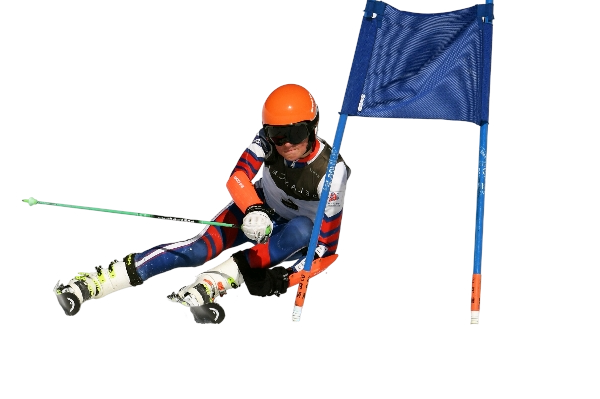
ISIA Speed Test Training
The ISIA Speed Test has become increasingly popular since 2020. It is a timed Giant Slalom designed to benchmark ski instructors’ racing ability and forms part of the ISIA qualification pathway.
The test is run on a full GS course with FIS-calibrated pace-setters. You get two runs and your best time is taken. The standard required varies slightly by gender, but the principle is the same: achieve within the set percentage of the pace-setter’s time and you pass. It sounds straightforward, but for instructors without a race background, arriving at that standard consistently under pressure is where the real work happens. Our guide on how to pass the ISIA Speed Test walks through the six factors that decide your run.
Our camps will be strategically placed through the year to align with low season and test dates and give a 360 degree package to make people arrive at their test with confidence knowing what to expect and what they needed to do.
We also offer Race Preparation. These days are planned to allow you to practice being in your ideal performance state for racing. Forget technical training, this is now about, getting inspections right and performing when it counts. We suggest having a day off or very light day prior to the test so you can peak
Our training includes:
Eurotest Training
Podium has been running Eurotest training since 2001 and consistently helping people to Eurotest success every year. Just check our track record!
The Eurotest is a timed Giant Slalom required for instructors seeking to teach in certain European countries, including France. You need to ski within a set percentage of a FIS pace-setter — a margin that is tight enough to require genuine race technique, not just competent recreational skiing. For most instructors who come to us, that gap is significant. Bridging it is exactly what Podium is built for.
With various camps at strategic times throughout the year, working with Podium will help you reach the required standard and smash those tests. If there is enough interest we will run a dedicated Eurotest camp ahead of the winter test sessions — register your interest to be kept posted. New to the test? Start with what the Eurotest is and the latest Eurotest dates.
Like the ISIA training we give a training approach that dives deeper than just the hours on the snow.
We provide:
Foundation Training – Your Bridge to Success
We have pioneered these specially designed weeks to allow you to make the step to race training. With easier skis, courses, and lower speeds, we work on the fundamentals that will allow you to make the step up to more full-on racing in a logical and progressive way.
We focus on:
Where We Train
Our camps run across the season at some of the best race training venues in Europe. Wherever you are in your preparation — whether you need an early summer block to build foundations or a final-week sharpener before your test — there is a camp to suit.
Les 2 Alpes, France — May / June
Summer glacier training on one of Europe’s finest race venues. Perfect for building volume and technique in the off-season when most resorts are closed.
Stelvio, Italy — September / October
The Stelvio glacier opens early and provides superb autumn training conditions on a purpose-built race stadium. A popular block for instructors targeting winter tests.
Saas-Fee, Switzerland — November
Early season training at altitude. Saas-Fee is a World Cup venue with excellent snow reliability in November and a dedicated race training area.
Zinal, Switzerland — December
Zinal opens exclusively to competition skiers in early December, making it one of the best training environments in Europe at the start of the season. Camps here are timed to align with winter test dates.
Pila, Italy — March
A late-season camp for instructors targeting spring tests and anyone needing a final preparation block.
Explore each venue in more detail — Saas-Fee, Zinal, Passo Stelvio, Les Deux Alpes, Courchevel, Hintertux and Kåbdalis — or see our full Where We Train hub, including indoor and dryland training options.
Frequently Asked Questions
Do I need racing experience to join a Podium camp?
No. Our Foundation Training programme is specifically designed for instructors who have never trained in race gates. We start with easier terrain, easier skis and lower speeds to build your technique progressively before moving to full GS sets. Many of our most successful pass holders started from scratch.
What is the difference between the ISIA Speed Test and the Eurotest?
Both are timed Giant Slalom tests that benchmark your racing ability against FIS pace-setters. The ISIA Speed Test is the international standard required for the ISIA card. The Eurotest (also known as the Test Technique or CTT) is a French qualification required to teach as a ski instructor in France. The time requirements differ slightly but the training approach for both is very similar — which is why many of our campers train for both at the same time.
How many camps do I need before I’m ready for my test?
It depends on your current level. Instructors with some race background often feel ready after one focused week. Those starting from scratch typically benefit from two or three blocks spread across the season — a foundation week, a training week, and a race prep day close to the test. We will give you an honest assessment of where you are and what you need.
Can I train for the Eurotest and the ISIA Speed Test at the same camp?
Yes. The technical demands of both tests overlap significantly and most of our camps are open to both. We run Eurotest and ISIA prep together and tailor feedback to whichever test you are targeting.
What ski equipment do I need?
GS Masters Race skis are recommended for the later training blocks and race prep days. For Foundation camps, piste orientated skis are fine — we deliberately use softer equipment to build technique before introducing the demands of a race ski. We offer ski tuning advice throughout and can point you in the right direction if you need to source race equipment.